Staggered junctions play a key role in road networks. They help manage traffic flow and cut down on accidents. If you drive often, you have likely come across one without thinking much about it. This post covers everything you need to know about staggered junctions. We look at what they are, how they work, their benefits, and more.
Road design matters for safety. Poor junctions can lead to crashes. Staggered junctions offer a better option in many cases. They break up complex crossings into simpler parts. This makes it easier for drivers to handle. In places like the UK, these junctions are common on busy roads. They replace traditional crossroads where risks are higher.
Why focus on staggered junctions? Traffic grows each year. More cars mean more chances for problems at junctions. Good design can save lives and reduce delays. This guide draws from road safety studies and design rules. It aims to give clear facts. Whether you are a driver, planner, or just curious, you will find useful info here.
We start with the basics. Then we move to history, types, and design. After that, we cover benefits and safety data. We also compare them to other junctions and share driving tips. By the end, you will understand why staggered junctions are a smart choice for modern roads.
Junctions make up a big part of road accidents. In many countries, 40 to 60 percent of crashes happen at them. Staggered designs aim to lower that number. They do this by reducing points where vehicles cross paths. Instead of all traffic meeting at one spot, it spreads out. This simple change can make a big difference.
Road experts have studied these junctions for years. Their findings show clear gains in safety. For example, changing a four-way junction to a staggered one can cut injury crashes by up to 33 percent in some cases. But it depends on traffic levels. We will get into those details later.
This post keeps things straightforward. Short sentences help with reading. We use lists and tables for key points. The goal is to provide value. You get facts backed by sources, not just opinions. Let’s begin with the definition.
What Is a Staggered Junction?
A staggered junction is a type of road intersection. It happens where two side roads meet a main road. But they do not meet directly across from each other. Instead, they are offset by a short distance. This creates two separate T-junctions close together.
Picture a main road running straight. One side road joins from the left. A bit further along, another joins from the right. Or vice versa. That offset makes it staggered. It avoids the direct crossing of a traditional crossroad.
Why use this setup? It simplifies traffic. In a crossroad, vehicles from four directions mix at one point. This leads to more conflicts. In a staggered junction, drivers handle one T-junction at a time. This reduces confusion.
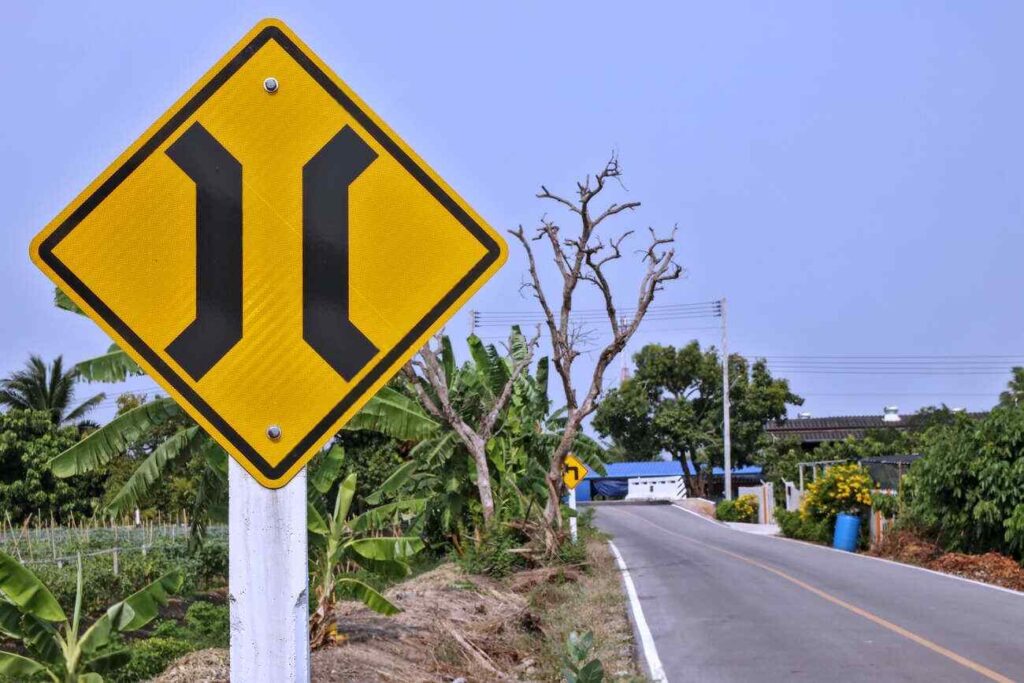
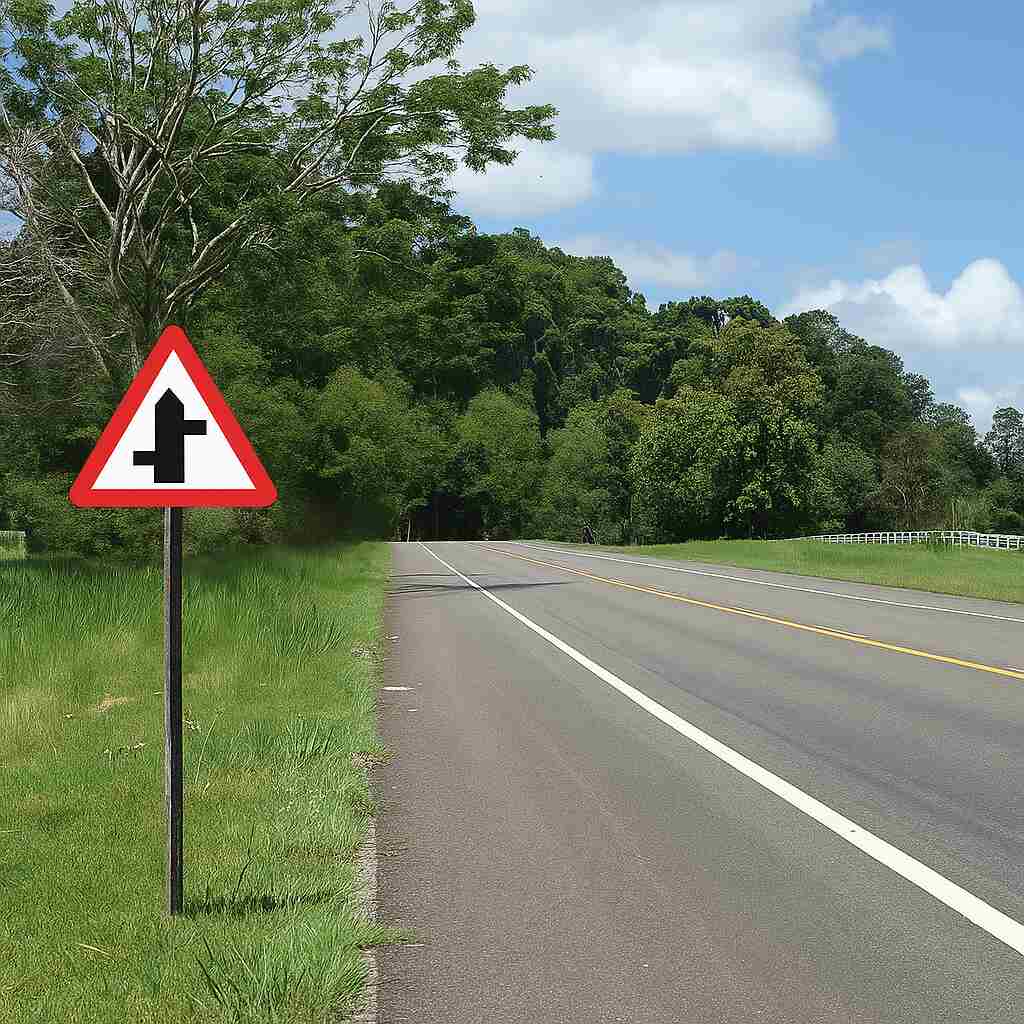
You often see warning signs for these junctions. In the UK, it is a yellow diamond sign. It shows a main line with two offset branches. One on each side. This alerts drivers to watch for turning traffic ahead.
Staggered junctions come in two main forms. Right-left stagger or left-right stagger. In a right-left, you turn right first, then left to cross. The choice depends on the road layout and traffic needs.
These junctions are common in rural and urban areas. They work well where side road traffic is not too heavy. On high-speed roads, they help maintain flow on the main route.
To spot one, look for the offset. If side roads line up, it is a crossroad. If not, it is staggered. The distance between the two T-junctions matters. Too close, and it feels like one big junction. Too far, and they act as separate ones.
Design rules set minimum and maximum gaps. For example, in some guidelines, the minimum is 50 meters. This ensures safety. We will cover design more later.
In short, a staggered junction breaks up a potential crossroad. It makes driving safer and smoother. Next, we look at how this design came about.
For more information, visit Road Signs Test.
The History of Staggered Junctions
Road intersections have a long past. Early roads crossed without much planning. As travel grew, so did the need for better designs.
Ancient Romans built straight roads. Their crossings were simple. But traffic was light. Horses and carts did not move fast. Accidents were rare compared to today.
In the 1800s, cities expanded. More vehicles meant more problems at junctions. Engineers started thinking about safety.
The 20th century brought cars. Speeds increased. Crashes became common. Road designers looked for ways to reduce risks.
Staggered junctions emerged as a solution. They turned dangerous crossroads into safer T-junctions. This idea likely started in the mid-1900s. Traffic engineering became a field.
In the UK, road safety pushed changes. Studies showed crossroads had high accident rates. Staggering the junctions cut those rates.
For instance, in the 1960s and 1970s, many roads were upgraded. Old crossroads became staggered. This was part of wider safety efforts.
International groups like the UNECE set guidelines. They promoted staggered designs for low-traffic areas.
In the US, similar shifts happened. Rural highways saw conversions. Data showed fewer crashes after changes.
Today, staggered junctions are standard in many places. They fit modern traffic needs. As roads evolve, so do these designs. New tech like signals adds to them.
But the core idea stays the same. Offset the meetings to reduce conflicts. This history shows how small changes improve safety over time.
Types of Staggered Junctions
Staggered junctions vary based on needs. Here are the main types.
First, simple staggered junctions. These have no extra lanes or islands. Just the basic offset T-junctions. They suit low-traffic areas. No need for complex features.
Second, ghost island staggered junctions. These include marked areas for turning. A ghost island is a painted zone in the center. It guides right-turning vehicles. This type handles more traffic.
Third, channelized staggered junctions. These use physical islands. They separate lanes. This prevents wrong moves. Common on busier roads.
You also have left-right versus right-left staggers. In right-left, the first minor road requires a right turn from the main. Then left for the next. Right-left is often preferred. It avoids waiting in the center of the main road.
For pedestrians, there are staggered crosswalks. These are not vehicle junctions. But they offset walking paths across wide roads. A median island breaks the crossing into two parts.
In rural settings, staggered junctions might include wider curves. This helps large vehicles turn.
Urban ones may add signals. But basic types rely on give-way signs.
Each type fits different speeds and volumes. Planners choose based on data.
Here is a table comparing types:
| Type | Features | Best For |
|---|---|---|
| Simple | No islands, basic offsets | Low traffic, rural roads |
| Ghost Island | Painted turn areas | Medium traffic, single carriageways |
| Channelized | Physical islands | Higher traffic, safety focus |
| Left-Right Stagger | Offset starting left | Specific flow needs |
| Right-Left Stagger | Offset starting right | Preferred for less center waiting |
This shows options for different situations.
Design Principles for Staggered Junctions
Good design is key to effective staggered junctions. Rules cover layout, visibility, and spacing.
Start with layout. The minor roads should meet the major at 90 degrees. Skew angles cause issues. If skewed, curve the minor road to straighten it. Minimum curve radius is 50 meters.
Visibility is crucial. Drivers need clear sight lines. From the minor road, see along the major. Distances depend on speed. For 50 km/h, 70 meters. For 100 km/h, 215 meters.
Spacing between the two T-junctions matters. Minimum 50 meters for new ones. Maximum varies by speed limit. For 100 km/h, 200 meters max. Beyond that, treat as separate junctions.
Include turning lanes if needed. For right turns, add bays. This keeps main flow moving.
Gradients should be gentle. Near the junction, keep slopes between +2.5% and -2.5%. This aids stopping.
For large vehicles, check swept paths. Use software to ensure turns fit.
Active travel gets attention too. Add paths for cyclists and walkers. Keep them clear of vehicle lanes.
Signs and markings guide users. Give-way lines on minors. Warning signs approach the stagger.
In compact setups, like near overpasses, stagger to avoid see-through issues.
Factors like terrain and land use affect choices. Flat areas are easier. Urban spots need more pedestrian focus.
Costs play a role. Simple designs are cheaper. But safety savings justify more complex ones.
Guidelines from bodies like TII provide details. They ensure consistency.
Proper design makes staggered junctions work well. It balances flow, safety, and cost.
Benefits of Staggered Junctions
Staggered junctions offer many pluses over other types.
First, they boost safety. By offsetting, they cut crossing conflicts. Vehicles do not cross directly. This lowers crash risks.
They suit high through-traffic. Main road flow stays smooth. Side roads give way.
Speed reduction happens naturally. Drivers slow for the offsets.
For low-traffic sides, they are ideal. No need for lights or roundabouts.
They need less space than some options. But more than a single crossroad.
In rural areas, they handle farm vehicles better. Wider turns possible.
Upgrading old crossroads to staggered cuts accidents. Studies show big drops.
They are cost-effective. Often cheaper than signals.
Environmental perks too. Smoother flow means less idling. Lower emissions.
For pedestrians, if designed right, safer crossings.
Overall, they provide a balanced approach. Good for many road types.
But they have limits. High side traffic may need other solutions.
When side volume is medium to high, benefits shine. Crash cuts of 20 to 33 percent.
They appear less complex to drivers. Easier to navigate.
In short, staggered junctions improve roads in practical ways.
Safety Statistics on Staggered Junctions
Data shows staggered junctions are safer than crossroads.
Converting a four-leg to staggered reduces injury crashes. Overall, about 20 percent drop.
But it varies by side road traffic. If side is less than 15 percent of total, crashes may rise. Up to 34 percent more injuries.
For 15 to 30 percent side, 25 percent fewer injuries.
Over 30 percent, 33 percent reduction.
Property damage crashes show smaller changes. Sometimes slight increases.
In rural areas, total crashes drop 20 to 60 percent in some studies.
Urban signalized ones see 20 percent less.
Roundabouts have low fatality rates. But staggered beat crossroads and T-junctions in some data.
Junctions cause 20 percent of road fatalities in Europe.
In Japan, junctions account for 54 percent of accidents.
Staggered designs lower these numbers by simplifying moves.
Pedestrian crashes are higher at complex junctions. Staggered help there too.
Speed plays a role. Higher speeds need better visibility.
Studies from US, Australia, Europe confirm gains.
But low sample sizes in some limit certainty.
Overall, stats support using staggered where fit.
Real-World Examples of Staggered Junctions
Staggered junctions appear in many places. In the UK, they are on A-roads and locals.
For example, near Surrey, they break up street lines. This reduces speeds and adds views.
In Swindon, old photos show staggered setups on historic roads.
Driving tests often include them. Like in West Wickham.
In Australia, 559 sites saw crash drops after conversion.
US rural highways have many. Two intersections showed 29 to 53 percent fewer crashes.
Europe uses them on secondary networks.
These examples prove they work in practice.
Staggered Junction vs. Crossroads
Staggered and crossroads differ in setup and performance.
Crossroads have four arms meeting at one point. Direct crossings occur.
Staggered split into two T’s. No direct cross.
Conflict points: Crossroads have 32. Staggered have fewer, like 8 to 12.
Safety: Staggered safer. Less crossing crashes.
But crossroads suit low speeds. Easier for all directions equal.
Staggered better for main road priority.
Space: Staggered need more along main road.
Driving: In crossroads, watch all sides. In staggered, handle one at a time.
Signals often needed for busy crossroads. Staggered can use signs.
Conversions favor staggered for safety.
In short, staggered win on safety for many cases.
Driving Tips for Staggered Junctions
Approach with care. Look for signs.
Slow down early. Check mirrors.
If on main, watch for turning vehicles.
If turning from side, give way.
Signal clearly. But if straight through stagger, may not need.
Position right for turns.
Look both ways at each T.
In rain or dark, extra caution.
Practice in tests helps.
These tips keep you safe.
Conclusion
Staggered junctions improve road safety. They offer a simple fix to complex crossings. With proper design, they reduce crashes and ease flow.
This guide covered the basics to advanced. Use this info to understand them better.
Road design keeps changing. Staggered junctions remain a solid choice.